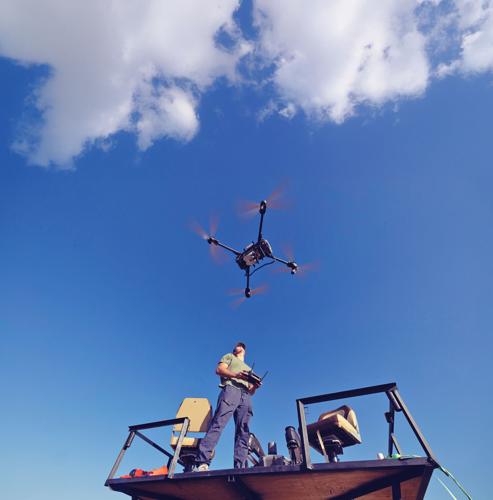


It wasn’t long ago that photography was an exclusive, expensive and time-consuming craft.
You didn’t just need a camera — you needed film, a darkroom, a trained eye and lots of time to produce your own images. The arrival of commercially available digital cameras in the 1990s caused a reckoning. Film giants crumbled, professional film photographers scoffed at the quality of pixelated images, and small businesses built around developing film went extinct.
But photography didn’t die. It evolved and democratized. Jobs and industries disappeared with the advent of digital photography, but new jobs and industries took their place. Most people carry in their pockets the ability to produce high-quality images quickly, whether for work or as a hobby.
Digital photography is a preview of how artificial intelligence will reshape not just industries, but entire economies.
Public higher education was born in 1785 when the University of Georgia received its state charter, making it ripe for disruption and innovation in not just how students are taught, but the kinds of careers they are trained for, and how universities themselves operate.

Higher education now finds itself in a pivotal moment. Instead of sounding the alarm bells over AI or simply dismissing its future impact, the University of Nebraska at Omaha is embracing its potential.
“Institutions that resist AI or cling to outdated teaching models risk falling behind. But those that embrace AI as an amplifier by enhancing teaching, expanding research and preparing students for a dynamic future have the chance to lead in an era of unprecedented innovation,” Jaci Lindburg, Ph.D., associate vice chancellor for Innovative and Learning Centric Initiatives, said.
In 2024, UNO launched the state’s first-ever bachelor’s degree program in artificial intelligence. The Division of Innovative and Learning Centric Initiatives also launched the AI Learning Lab to equip faculty and staff with AI skills, infuse AI into coursework, identify opportunities for operational efficiency through the use of AI and amplify the ethical use of AI use throughout the UNO community.
“Where some institutions might stop at simply preparing students for an AI-integrated workforce, UNO is thinking ahead by empowering our faculty and staff to drive innovation in teaching, research and campus operations,” AI Learning Lab program manager Cassie Mallette said. “By fostering a culture of responsible AI use and continuous learning, UNO is positioning itself and the state of Nebraska at the forefront of the next wave of technological progress.”
Just as digital photography expanded possibilities instead of ending photography, AI is reshaping higher education, not replacing it. UNO is embracing this shift, equipping students, faculty and staff with skills to lead in an AI-driven world. The future of AI is here, whether or not the world is ready for it. At UNO, the work to shape the future, not react to the current moment, is already underway.
To learn more, visit unomaha.edu.