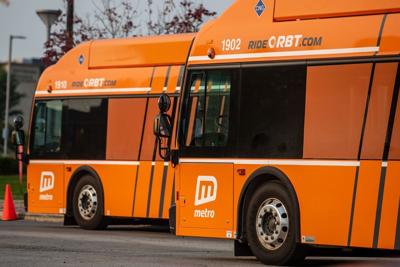


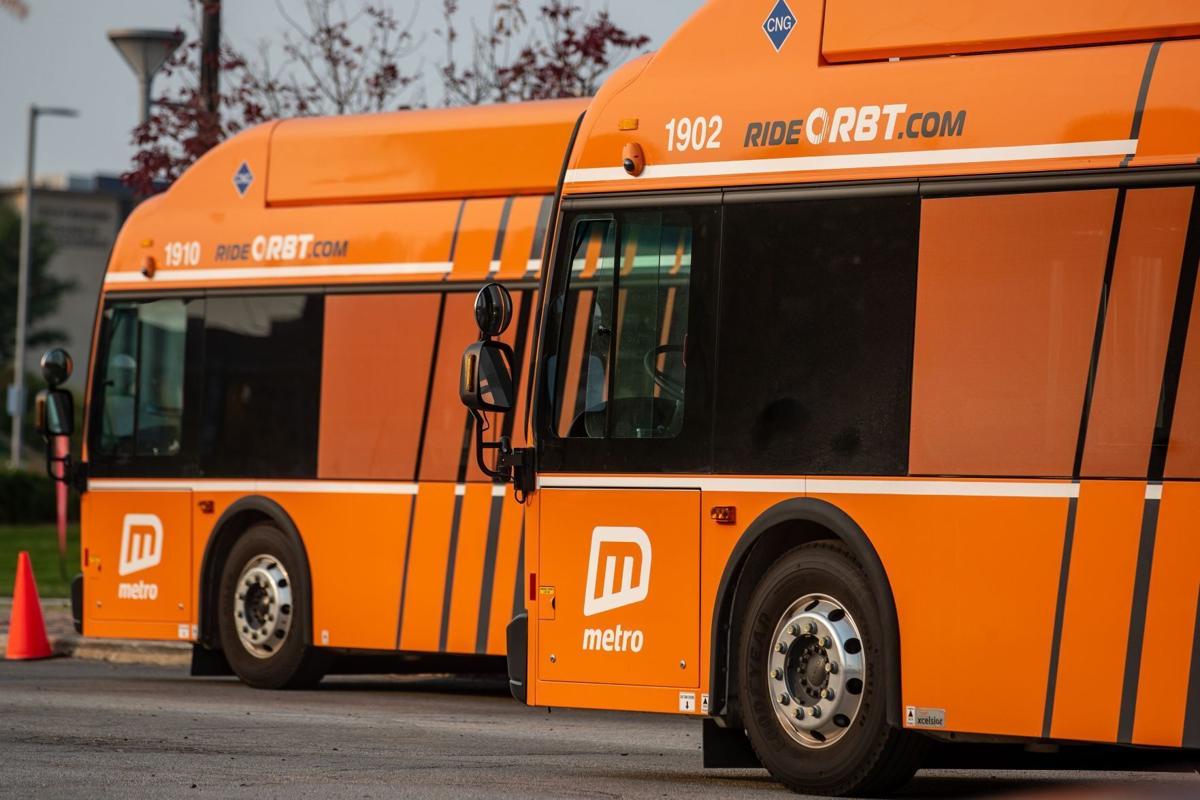
Omaha’s transit authority is shifting to become a regional entity, and it’s inviting communities in Sarpy County and elsewhere in the metro to join — if they want.
The move reflects the importance of interconnectedness and with working across jurisdictional lines on public transportation.
The board overseeing Omaha’s Metro transit voted Thursday, June 23, to convert from the Transit Authority of the City of Omaha into a Regional Metropolitan Transit Authority of Omaha, taking advantage of a change in state statute approved by lawmakers in 2019. The change takes effect Aug. 1.
“We’re taking on the challenge to provide for the people in the community and connect them to the places that matter,” board member Daniel Lawse said in a news release.
Mayor Mike Evans said Gretna would need to learn a lot more before making commitments, but he would like to take a look at the opportunity.
People are also reading…
“Public transportation is really important,” Evans said. “We have a lot of people in Omaha, and we have people that come out to Gretna now to start working. So I think we do need to connect our communities.”
Lauren Cencic, Metro’s CEO, said the conversion opens the door for Metro to bring its public transportation services beyond Omaha’s city limits — although it won’t extend beyond the state line into the Iowa communities in the metro such as Council Bluffs or Carter Lake.
Metro currently provides contracted services in Bellevue, Papillion, La Vista, Ralston and Council Bluffs. Those cities — except Council Bluffs — now have the opportunity to join the regional transit authority, although Metro’s service area will remain the same for now.
Cencic said Metro’s change “acknowledges that our region goes beyond downtown Omaha,” which is a “vital step in creating a more connected, prosperous region.”
The move also provides flexibility for Metro’s funding, allowing it to levy up to 10 cents per $100 in taxable valuation within its jurisdiction. As part of that, Metro will shift to having an elected board, likely starting in 2024.
Gretna sits between Omaha and Lincoln, and Evans said he thinks a connection between those two metropolitan areas with a stop in Gretna would make a lot of sense.
“We have families going both directions,” said Evans, adding that the city has already done some work identifying where a stop could go and how a bus route could pass through Gretna.
Metro has already been a part of multiple regional initiatives, such as the Heartland 2050 plan developed by the Metropolitan Area Planning Agency. Those planning efforts have stressed the importance of transportation. For example, MAPA found that expanding regional transit could add up to 8,000 new jobs and create an economic impact of $1.8 billion in business revenue for the region by 2050.
“Those conversations and those efforts have really emphasized and reiterated the need to think about how people move throughout the whole region, and not just within a city,” Cencic said. “This is an opportunity for us to continue to make improvements on some of those big ideas that have been shared for years.”