
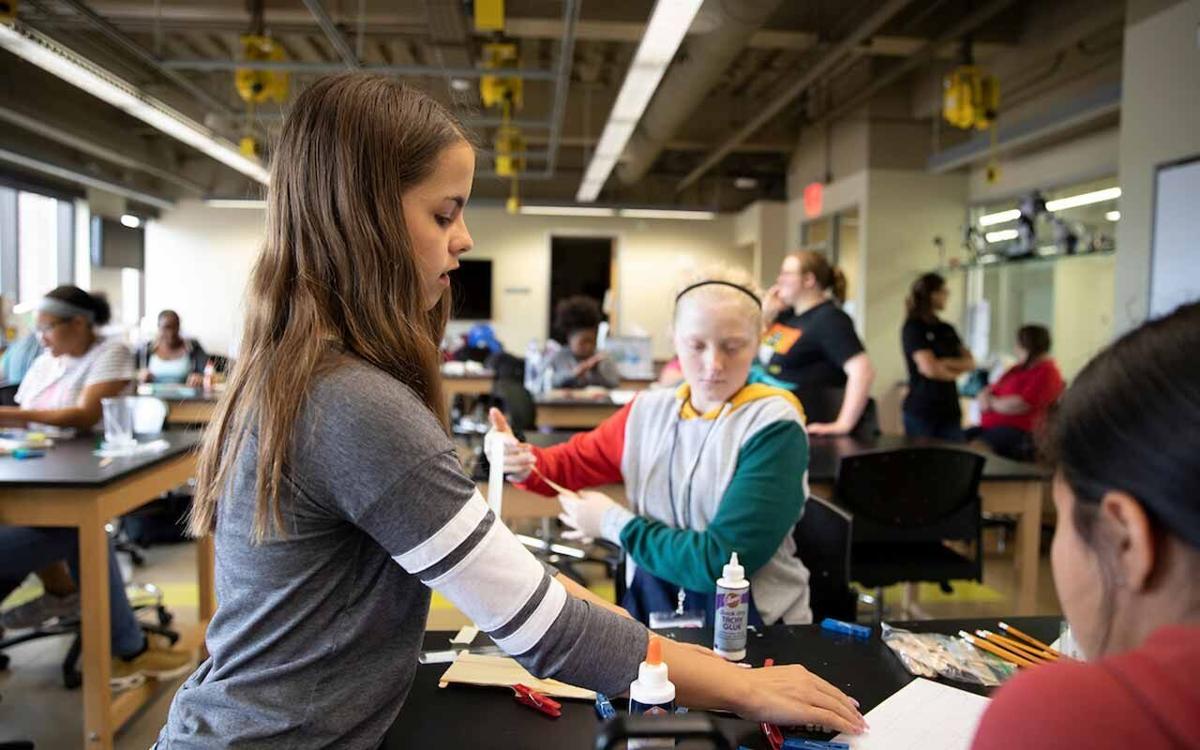
A recent study conducted by a researcher at the University of Nebraska at Omaha (UNO) is providing insights into why some female students engage in scientific research and learning opportunities, ultimately leading to a stronger likelihood of careers in the science, technology, engineering, and mathematics (STEM) fields.
Why it matters
The study, conducted by UNO’s Justin Andersson, Ph.D., comes at a time when the STEM workforce and STEM educators are lacking across the United States, and provides recommendations based on collected data about how to foster and support interest in the fields among women, who are underrepresented students in STEM.
Study details
The study, which includes data from 20 students across 8 rural and urban districts in a Great Plains state, creates a theoretical model of why female students across grades 6 through 12 re-engage in scientific research for experiences like a science fair.
People are also reading…
- All student participants interviewed had engaged in a science fair within two years, and all but one were interviewed during a science fair year. The students came from a variety of backgrounds, some of which had STEM-involved family members and some that did not.
- Data collected through interviews was analyzed using a constructivist grounded theory approach, meaning the goal is to understand the participants’ lived experiences and how they view reality.
Key findings on motivation
While previous scientific research on student engagement in science research learning opportunities exists, Andersson’s study takes a deeper dive into motivation and processes behind female students’ continued participation in scientific research and experiences.
- Student choice and meaningfulness are significant sources of motivation to engage in science research, science fairs, and continued science education.
- Awards and prizes, especially during initial experiences, along with scholarships and recognition, can be motivating, confidence-building factors for many students.
- Research suggests that “solving real-life problems” was an important part of a student’s decision to engage in research for a science fair.
- In most cases, students sought out science fair experiences for the positive outcomes that come with them (for example, confidence and better content understanding).
- When students experience autonomy in choosing their topic and conducting the research, they are more likely to continue to engage in STEM.
- Students who continually chose to engage in STEM are those who developed a sense of becoming an expert on their topic and who saw themselves as members of a science community.
Recommendations for empowering young scientists
Andersson’s key findings led to several recommendations for educators, administrators, and other stakeholders to help bolster STEM education and continued interest in young female students. His recommendations include:
- Fostering inquiry skills: student research experiences support students’ development of inquiry skills.
- Recognizing student achievements: awards and recognition are helpful for most participants, at least at some point in the process.
- Scientist support: students who have access to professional researchers and research-lab type resources are often well positioned for success.
- Seeking learners from all backgrounds: all learners need opportunities to have supported research experiences, as they can be life changing.
- Social support: students rely on support and mentorship to navigate challenges of research.
- Student researchers: allow students to do the actual work of research from conception to experimentation to results.
- Promoting passionate research: students should be allowed to pursue topics they deem meaningful.
What they’re saying
Justin Andersson, Ph.D., said, “Understanding the factors that lead students to engage in and want to continue their STEM education is vital to building a robust STEM workforce for the future. More than that, helping students identify strengths, build confidence, think critically, and have potentially life-changing experiences early on can carry them through their future educational and professional experiences for years to come.”