
From deepfake scams to virtual reality digital twins, NCITE researchers are helping practitioners understand how emerging AI technologies can be used and misused.
Artificial intelligence is no longer confined to chatbots and text generators. Today, it can clone voices, create convincing fake videos, and build immersive virtual replicas of real-world environments, capabilities that are creating new opportunities and new security challenges.
What's new
This spring, NCITE consortium members based at the University of Alabama, the University of Oklahoma, and Penn State University conducted immersive workshops with national security and public safety practitioners to help them understand the risks these technologies pose, how they can be prevented, and the opportunity these technologies provide to support mitigation.
People are also reading…
Why it matters
Security practitioners need to be at the cutting edge of emerging technologies that bad actors can exploit, and arm themselves with the knowledge, technological tools, and best practices to prevent such activity.
By the numbers
- Seventy-eight practitioners trained across the workshops.
- Three universities, with funding from UNO-NCITE, collaborated on the training effort.
- Nearly seven hours per workshop of hands-on deepfake training and exercises.
Virtual steam plant training
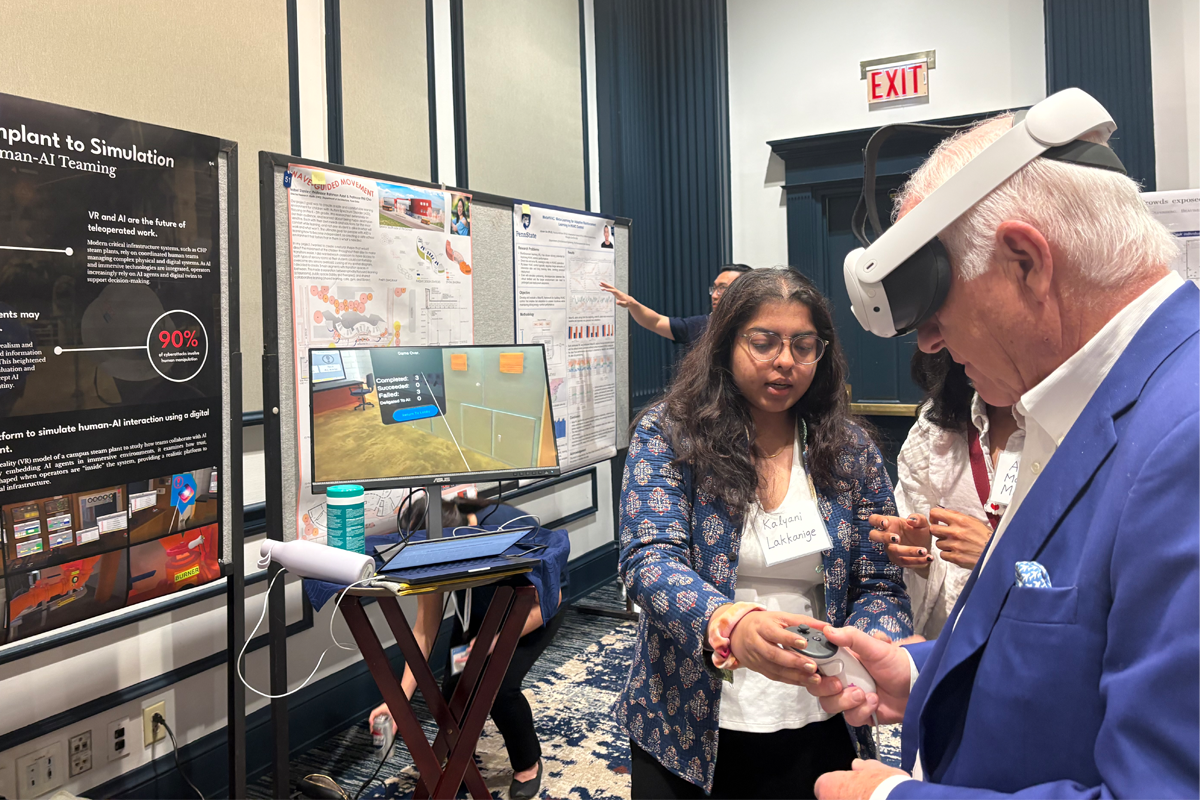
Penn State researchers invited steam plant operators to explore a virtual reality digital twin of a steam plant. The experience exposed participants to both the possibilities and potential dangers of immersive technologies while helping researchers evaluate the platform's accuracy, utility, and AI-assisted features.
Researchers gathered feedback on the digital twin's design and on an AI assistant embedded within the virtual environment. The team has also explored partnerships with local law enforcement agencies to increase practitioners' familiarity with these systems.
Deepfakes in homeland security
Researchers from the University of Alabama and the University of Oklahoma led a nearly seven-hour workshop on deepfake technologies with security practitioners that combined teaching, demonstrations, hands-on exercises, and guided discussions. Participants learned how deepfake audio and video are created, how detection technologies work, and how organizations can incorporate mitigation practices into investigative and intelligence workflows.
The workshop also included red-teaming exercises where participants created simple deepfakes of their colleagues before attempting to identify manipulated media using human judgment and detection tools.
What they're saying
Tim Patterson, Power Plant Operations & Maintenance Supervisor, Penn State University Steam Plant:
“This is so realistic I keep forgetting I’m in a simulation.”
Anonymous, Federal Digital Evidence Forensic Lab Manager:
"Our team was really impressed with the Deepfake training. Our investigative work focuses on prevention and mitigation of financial crimes. The training provided awareness of the capabilities available to bad actors to perpetrate financial and cyber-crimes against citizens as well as to disrupt public safety. One of the key take-aways for me was that this training should be provided to all those who work as investigators and analysts in law-enforcement."
Mike Shaw, CISSP, State Representative - District 47, Alabama House of Representatives:
"We should all be keeping up with the latest AI news. However, there is no substitute for focused, in-depth, hands-on training with the tools themselves. The “Deepfakes in Homeland Security: Capabilities, Risks, and Countermeasures” course at the University of Alabama (coordinated and sponsored by NCITE) delivered exactly that. I strongly believe protecting our citizens is a fundamental role of government, and training like this is essential to ensuring we are prepared to confront these emerging threats effectively."
The big picture
As artificial intelligence capabilities continue to evolve, practitioners across law enforcement, critical infrastructure, intelligence, and public safety sectors need more than awareness; they need practical experience. These workshops reflect NCITE's mission to equip homeland security professionals with research-driven insights and hands-on training that help them anticipate emerging threats, strengthen public trust, and protect communities.
What's next
Researchers from the University of Oklahoma and the University of Alabama will conduct a workshop at NCITE's Law Enforcement Summit on June 24, exposing Nebraska- and Iowa-based practitioners to their findings and training methods.