

“The Times They Are a-Changin’” is more than a song written by Bob Dylan, an anthem of change for the time.
It could be considered emblematic of the comparison between what today’s Baby Boomers recall about growing up on the farm compared to life in rural areas today.
An online conversation last fall of the state of “rural America” spawned what will be the focus of Osher Lifelong Learning Institute at the University of Nebraska-Lincoln (OLLI at UNL) 2024 Fall Symposium. An examination of the social, economic, and political issues of the rural and urban divide will be the crux of an October 12 program and luncheon at the UNL East Campus Union, Great Plains Room, 1705 Arbor Drive. The event is open to the public and registration is required.
The keynote speaker for the event is University of Miami of Ohio professor Steven Conn, whose book titled “The Lies of the Land” dispels several myths that surround rural America. In the book, Conn’s premise is that rural America has been shaped and influenced by the same trends that have transformed urban America, such as militarization, industrialization, corporatization and suburbanization.
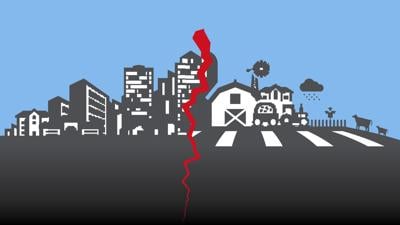
The United States appears to be split into two distinct areas: an urban “Blue” region characterized by social and cultural liberalism, and “Red” rural regions that resist social and demographic changes while resenting coastal elitism.
Marvin Almy, a member of the symposium organizing team and longtime active member of OLLI at UNL, explained how the discussion for the topic got started. “Peter Levitov, retired associate dean of international affairs at UNL, sparked an online conversation by circulating a review in “The New Yorker” of Conn’s book,” said Almy. The review was titled “Beyond the Myth of Rural America.”
Almy noted, “It is Conn’s belief that we won’t truly understand rural America until we gain a true picture of what is rural America and what are the influences that brought us to this point.”
‘Rural’ defined
Conn will detail his theme that there are many myths surrounding rural America which must be confronted before we can honestly deal with the problems faced by rural America. Conn points out that “rural” does not equal “farm” and that it includes the row-crop areas of the Corn Belt as well as the Southern areas that were parts of the old Cotton Belt.
Conn also points out that the number of people making their living from agriculture has declined for the last two centuries. “The farms that OLLI members grew up on in the 1950’s and ‘60s no longer exist,” noted Almy – which is why this symposium has the potential to be one of the more popular in the nine-year history of the symposium,” he said.
“So many of our members grew up on farms during that era and will be able to relate to the topic,” said Almy, also a product of the small family farm. “So many OLLI members and Baby Boomers in general will be able to relate to this discussion, which is why we will think it will be one of the better-attended programs in the series.”
Other speakers
Other guest speakers for the symposium will include Ronnie D. Green, former chancellor of the University of Nebraska system; Jena Ochsner, a tech-savvy, fifth-generation Nebraska farmer from Sutton, Neb.; faculty from the University of Nebraska Extension Service; and staff from the Center for Rural Affairs.
The symposium will be offered in-person for $20 (cost includes lunch) and live on Zoom for $15, so people can attend from anywhere.
The event is scheduled on an open date for the Husker football team.
The symposium is sponsored by OLLI at UNL, the Unitarian Church of Lincoln/Lecture Series, Humanities Nebraska, Bridge to Better Living, HoriSun Hospice, Allo Fiber, and Eastmont Senior Living Center.
Register for the event at https://olli.unl.edu